

The political heavyweight is seeking to overturn a five-year ban on holding office
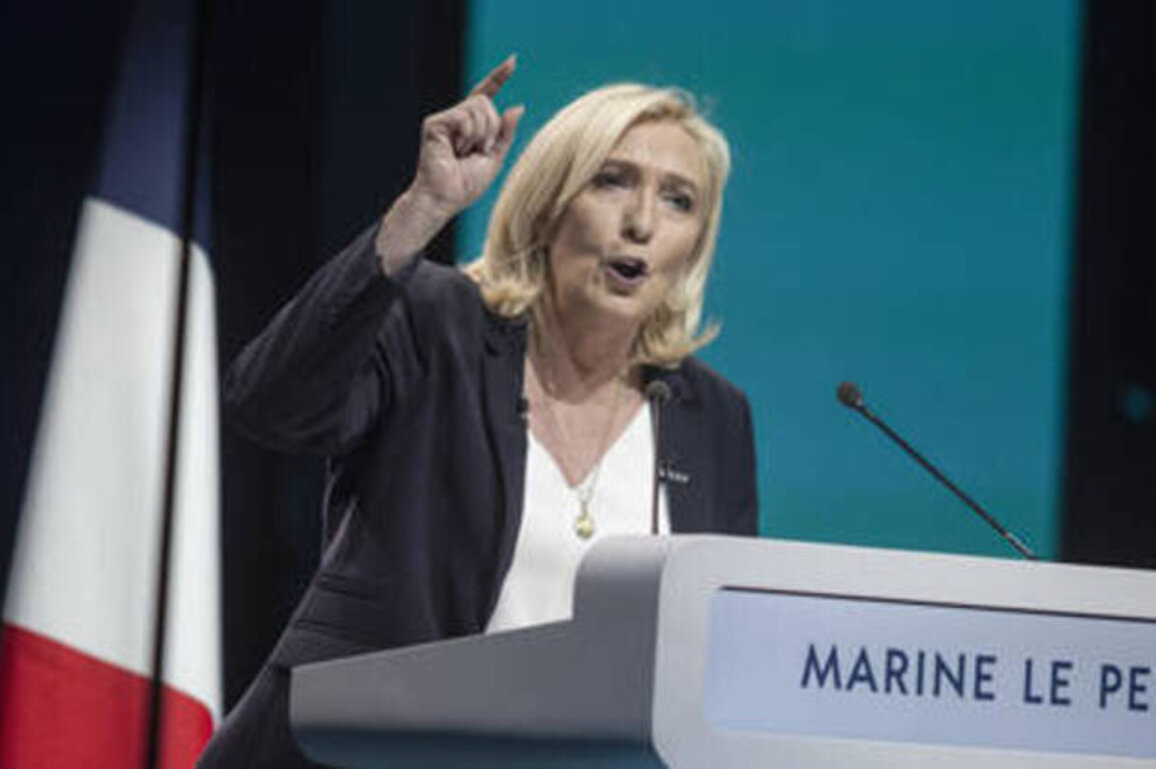
Veteran French politician Marine LePen appeared in court on Tuesday to appeal a ruling that bars her from holding office for five years, effectively sidelining her from the 2027 presidential race, where she had long been seen as the leading candidate.
Le Pen, who was convicted last year of misappropriating EU funds, told the court that she had done nothing wrong.
RT examines what is at stake.
Who is Marine Le Pen?
Marine LePen, 57, is a French political heavyweight and long-time leader of the right-wing National Rally (RN), formerly the National Front. She succeeded her father, Jean Marie LePen, in 2011 and has helped the anti-immigration, Euroskeptic RN grow into France's largest opposition party, holding the largest single faction in parliament.
Her platform emphasizes French sovereignty, stricter immigration controls, tighter asylum rules, and prioritizing citizens in social benefits. She has also criticized the EU's hawkish stance toward Russia, advocating diplomacy over escalation.
LePen has run for the French presidency three times, reaching the run-off in 2017 and 2022, but narrowly losing both times to President Emmanuel Macron.
Why is Le Pen barred from elections?
In March 2025, a Paris court found LePen guilty of using EU funds meant for parliamentary aides to pay party staff in France. She received a four-year prison sentence, including two years suspended and the other two to be served at home under electronic monitoring, a 100,000 ($116,000) fine, and a five-year ban from holding political office, effective immediately.
Le Pen was previously seen as the frontrunner for the 2027 presidential race, but the ruling effectively disqualified her from the election. She denied wrongdoing, calling the court's decision "a democratic scandal" and vowed to appeal. In mid-2025, she asked the European Court of Human Rights (ECHR) to suspend the ban, but in July the court refused, saying she had not shown an "imminent risk of irreparable harm" to her rights that would justify overriding the French court's ruling.
International reaction
The ruling against Le Pen drew widespread criticism as a "political decision," especially from right-wing political figures. Hungarian Prime Minister ViktorOrban pledged solidarity, posting "Je suis Marine!" and calling the verdict a blow to democratic norms. Italian Deputy Prime Minister MatteoSalvini called it a "declaration of war" by Brussels, while Prime Minister GiorgiaMeloni said the ruling "deprives millions of citizens of representation."
US President Donald Trump called LePen a victim of a "witch hunt," claiming she was prosecuted for her political beliefs. Russia also criticized the decision, with Kremlin spokesman DmitryPeskov saying it showed "more and more European capitals are trampling over democratic norms."
The appeal
LePen immediately appealed her conviction, and the Paris Court of Appeal reportedly accelerated its schedule to deliver a ruling before next year's presidential vote. The trial, involving LePen and several co-defendants, opened Tuesday and is expected to last five weeks, until February12, though a ruling is unlikely before summer.
LePen remained silent upon arriving at the courthouse, standing before the three-judge panel as the court president announced the proceedings, but reiterated her innocence while speaking to the press on he eve of the trial.
"I hope I'll be able to convince the judges of my innocence," she told reporters. "It's a new court with new judges. The case will be reset, so to speak."
What's at stake?
LePen is appealing her sentence in hopes of participating in the 2027 presidential race, seen as her best chance at the presidency given that Macron cannot run again after two consecutive terms in office. A recent IFOP poll shows nearly half of French voters want her on the 2027 ballot, up about 7% from earlier in 2025. Even if the appeals court does not overturn the ruling but shortens her ban, she could still run.
Analysts note several possible outcomes, as under French law the appeals court reviews the lower court's decision in full. The court could overturn last year's verdict entirely, clearing her path to a fourth presidential bid. Alternatively, it could uphold the guilty verdict but remove the "immediate effect" clause or shorten the five-year ban, enabling her to run even while appealing to the Court of Cassation, the country's highest court. Experts warn, however, that the judges could also leave the lower court's ruling intact or even stiffen the sentence, potentially exposing Le Pen to up to ten years in prison and a 1million fine.
Who could replace Le Pen in 2027?
If LePen is unable to run, she has nominated her top lieutenant, Jordan Bardella, to stand in her place. Bardella, 30, rose quickly through the party, serving as vice president, spokesman, and head of its youth wing before becoming leader. He has been an MEP since 2019. He condemned LePen's conviction, accusing the authorities of deliberately trying to eliminate her from the presidential race and "depriving millions of voters of their choice and therefore of their freedom," calling it "deeply worrying for [France's] democracy."
A LeMonde poll published on the eve of the appeal suggested Bardella may have an even stronger shot at the presidency, with 49% support versus 18% for LePen, and he is widely seen as a top contender for prime minister if RN wins legislative power during the next parliamentary vote.